
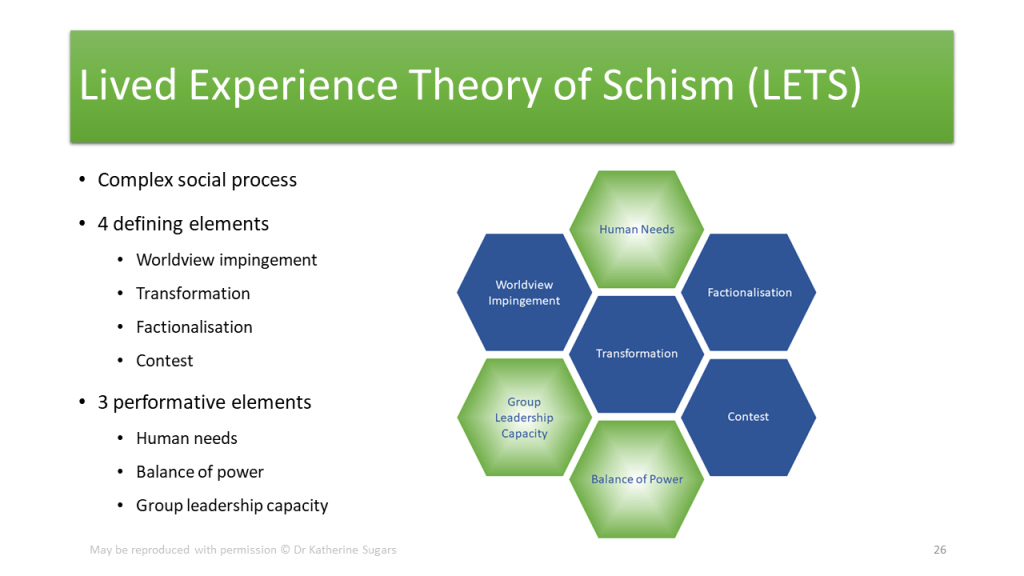
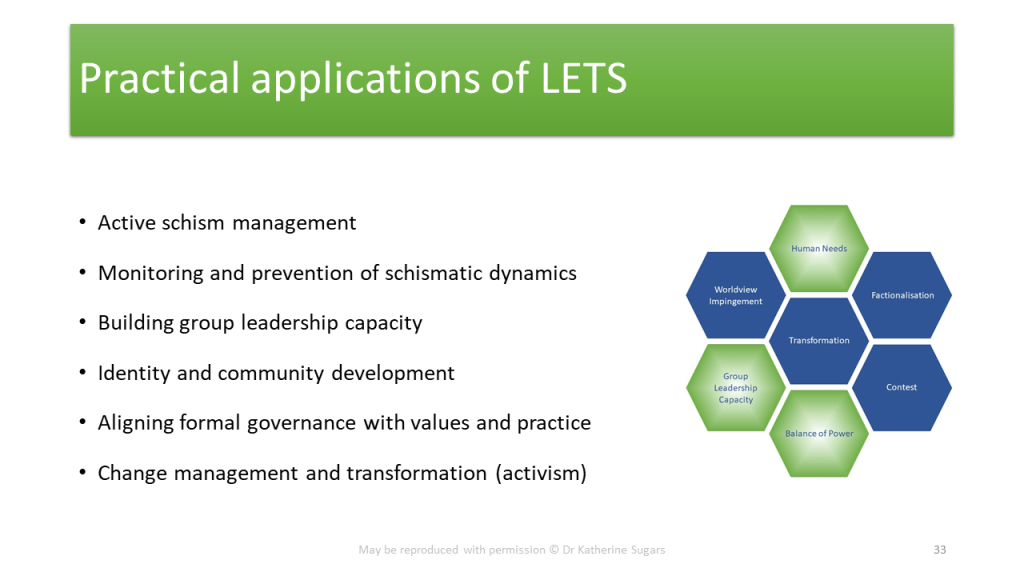
In this presentation I take you through my Lived Experience Theory of Schism, with a practical focus on understanding schismatic social dynamics. This understanding can generate a wider range of options for managing in the midst of an active schism, and also lend insight into developing healthy social dynamics that mitigate against incidence of schism.
This seminar was designed for my participants, friends and family members. I have therefore glossed over the research niceties, but I’m happy to tailor the talk for a different audience. (If you have already watched the presentation developing a new definition, you might like to pick this up part way through.)
Total recording time 32 minutes.

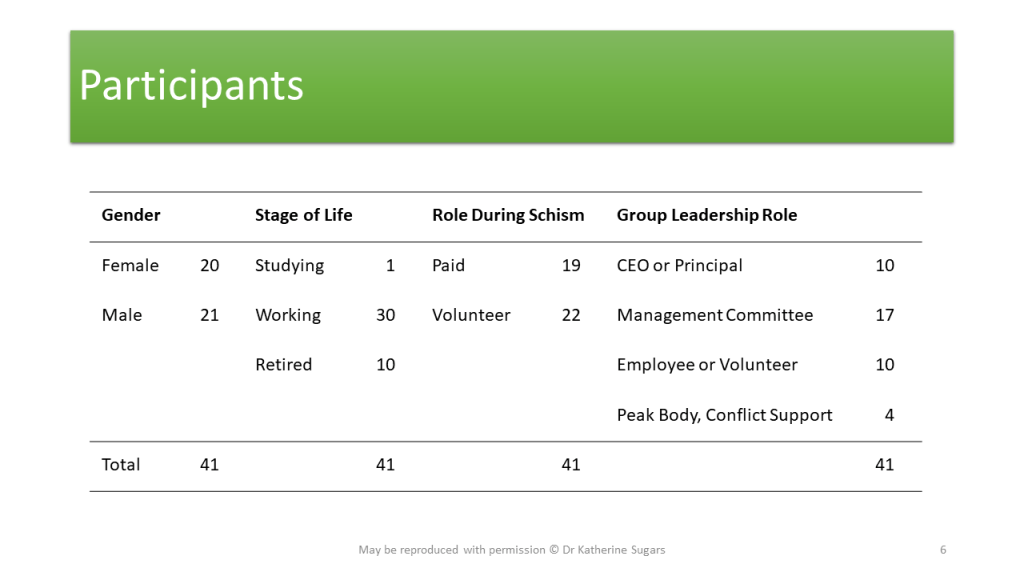
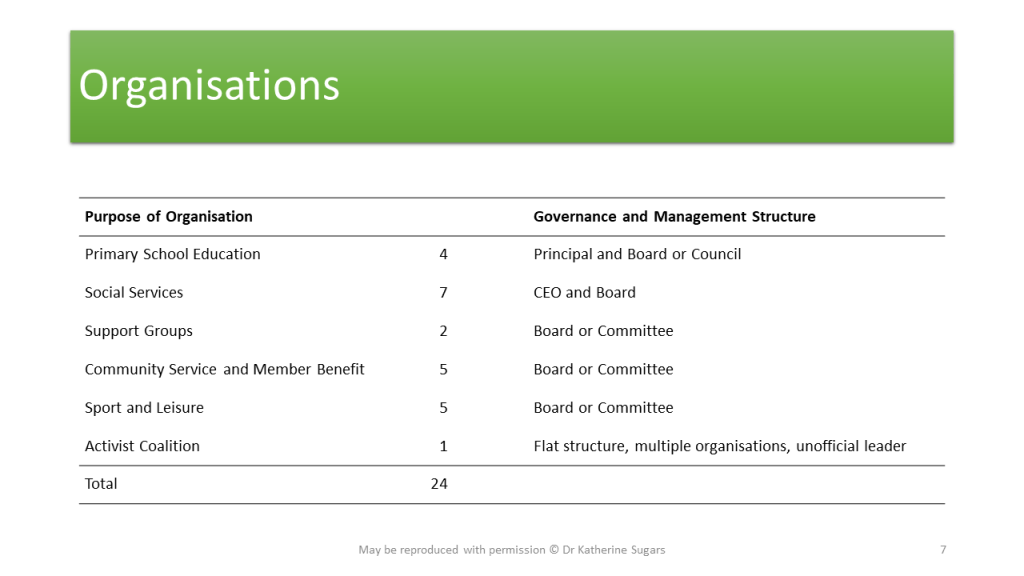
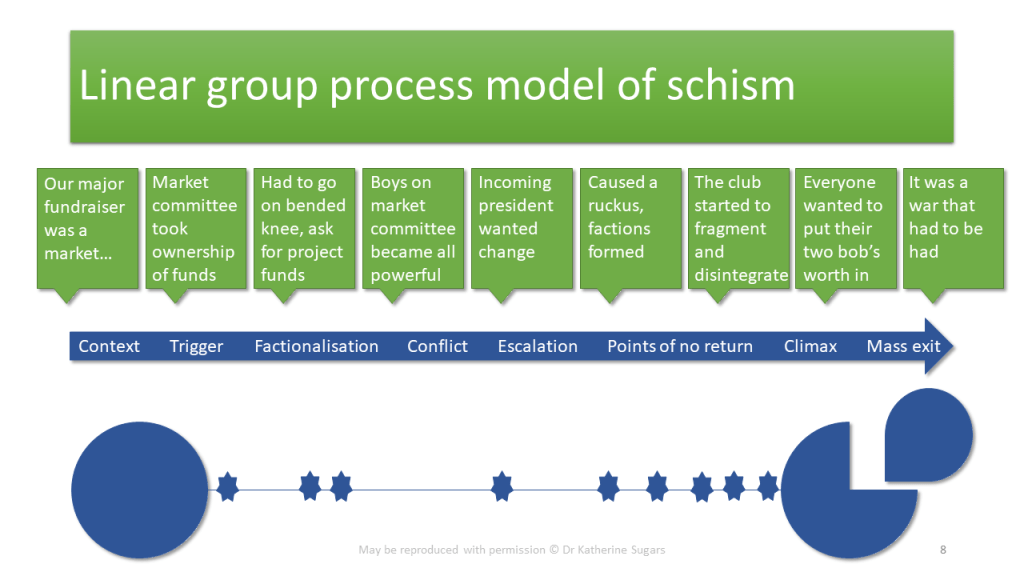
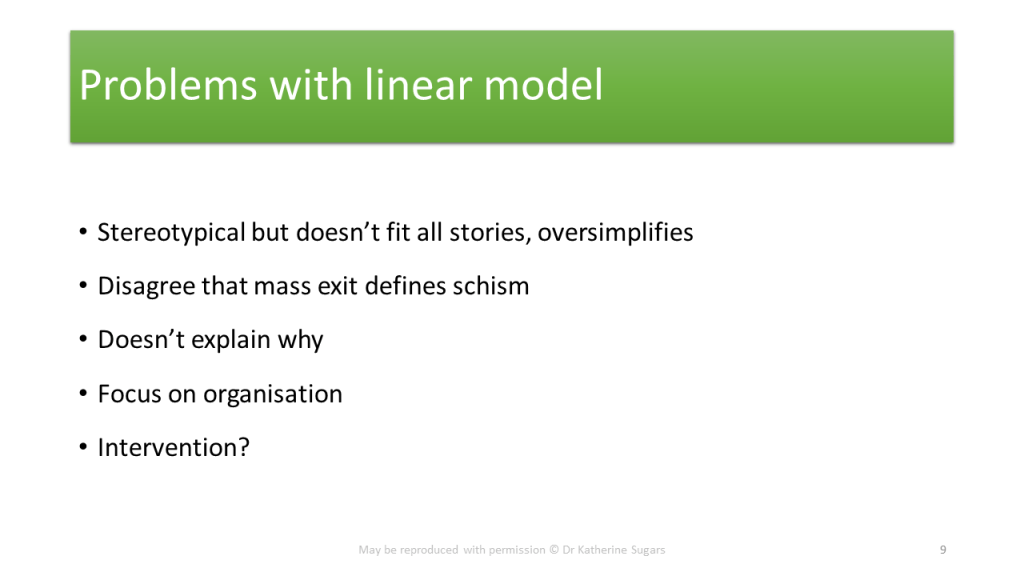
Food for thought: What is happening to the distribution of power in the nonprofit sector? This is outside the scope of my thesis, but I have some ideas. Happy to have a conversation.
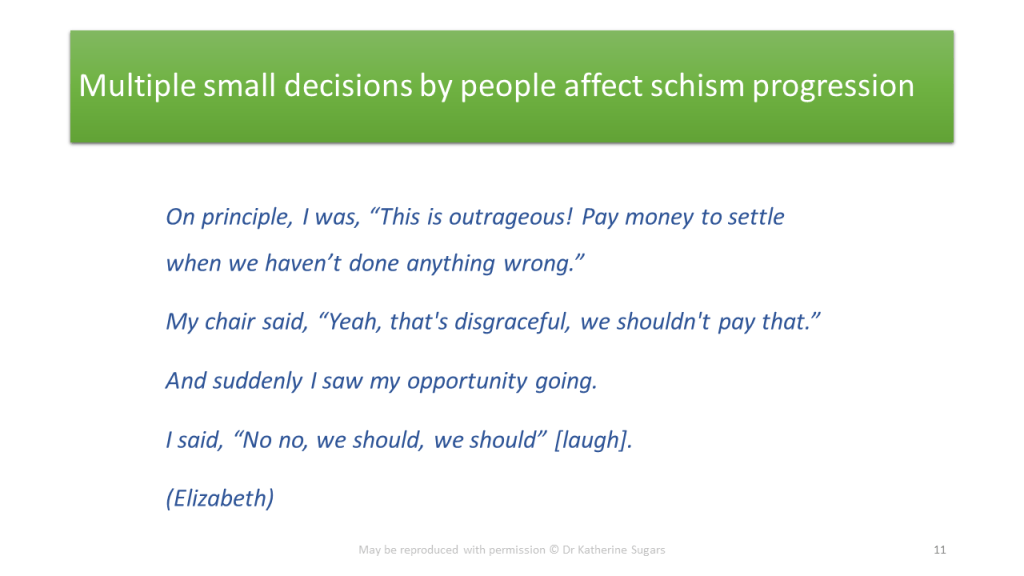
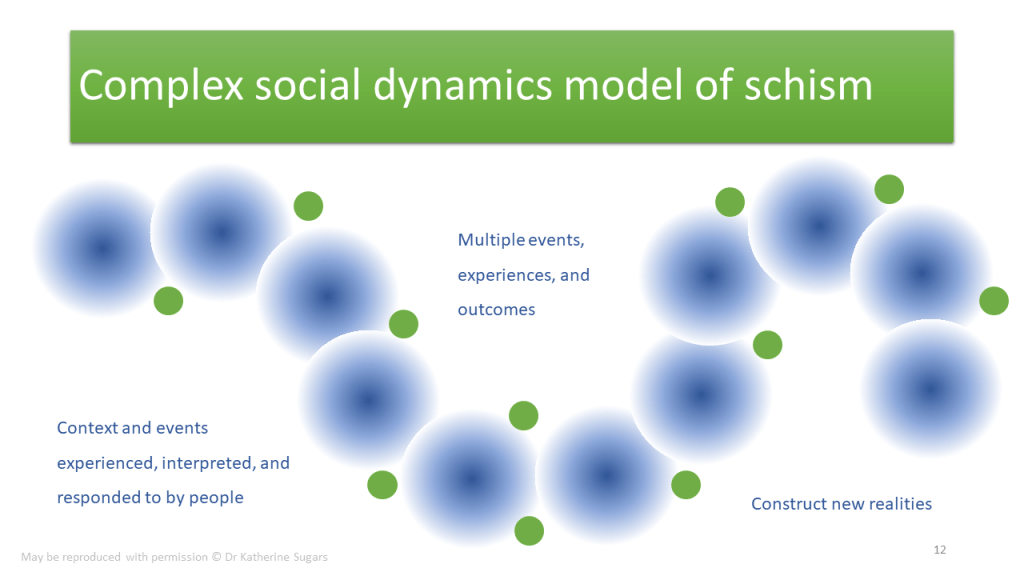
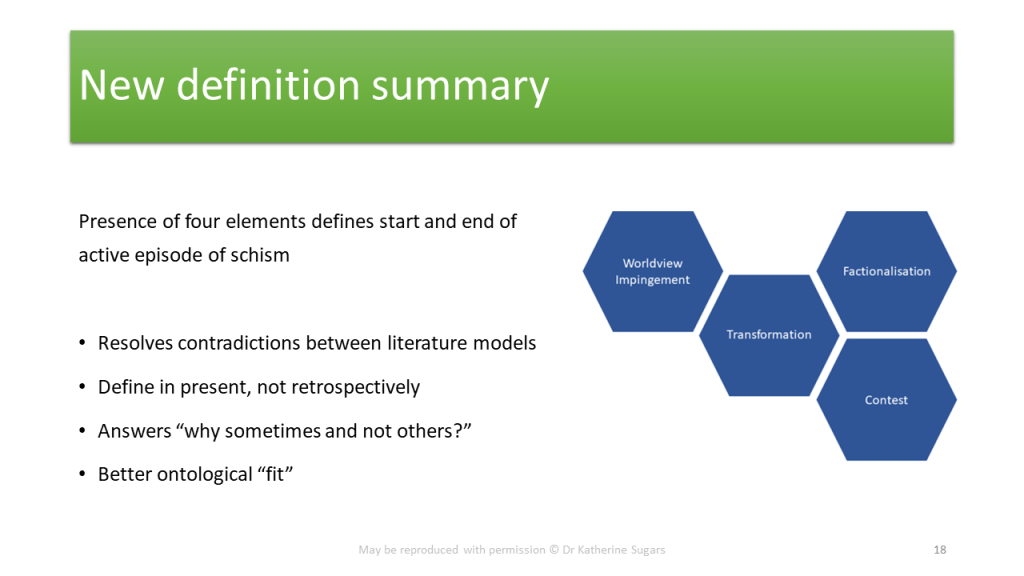
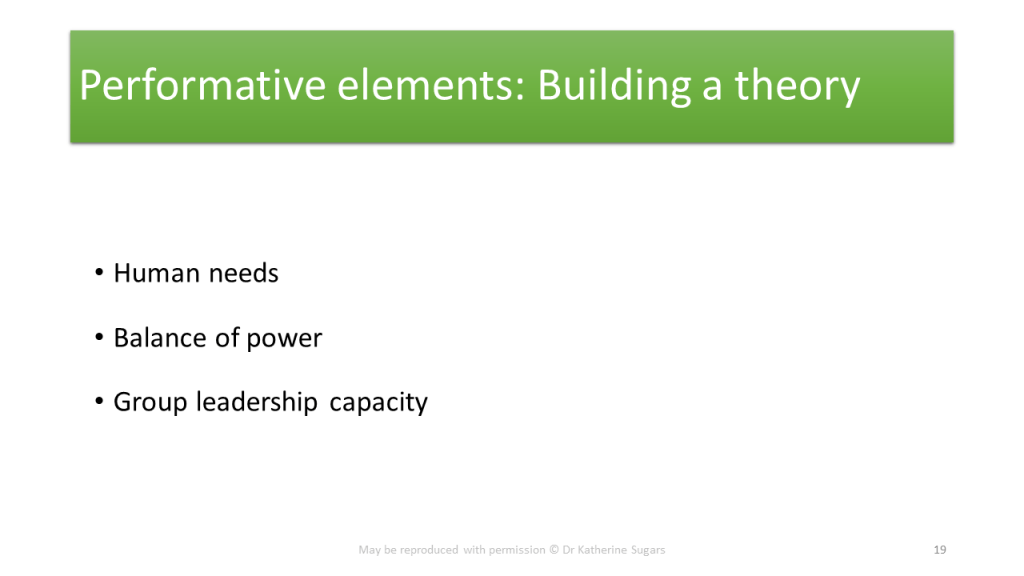
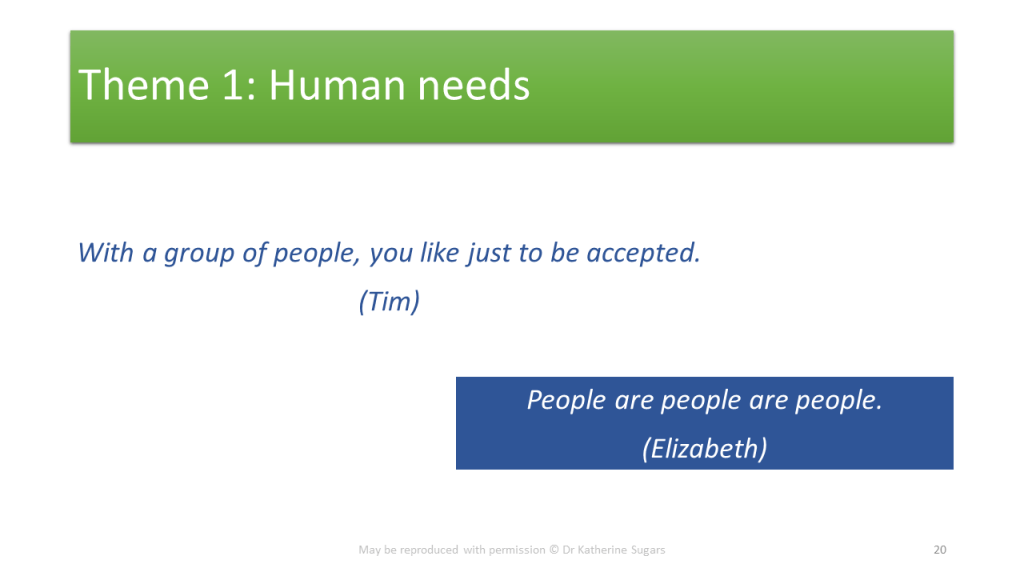
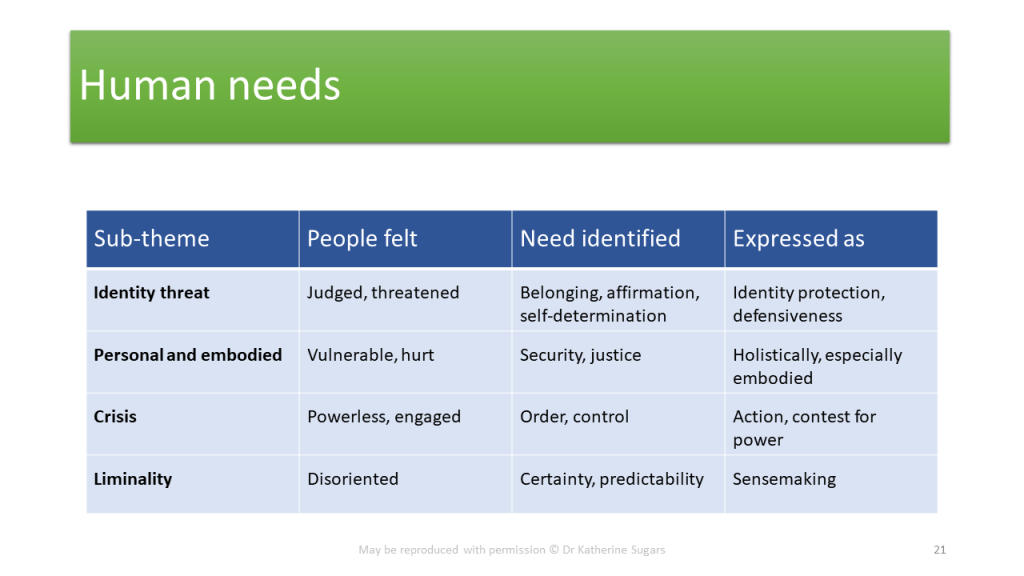
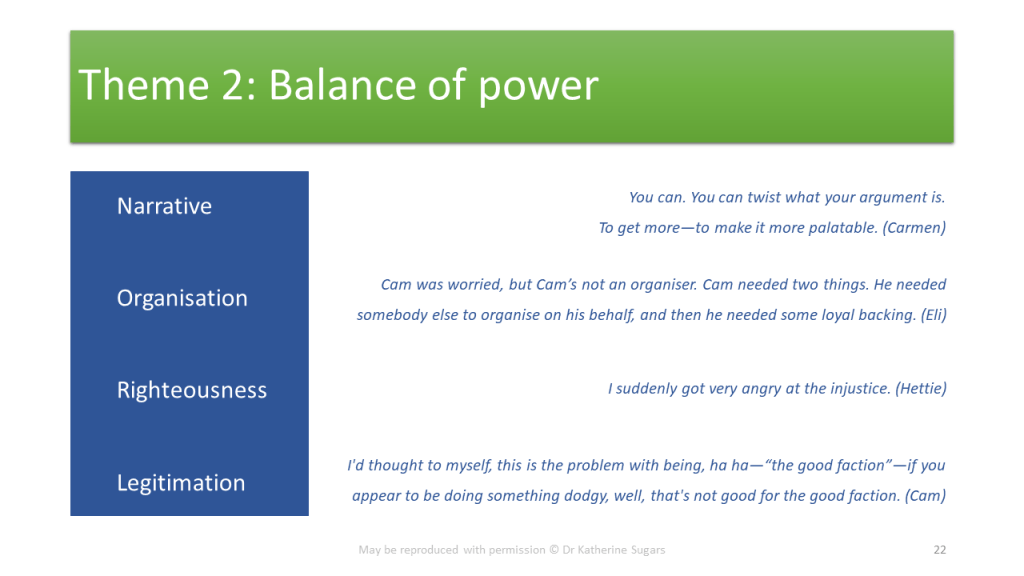
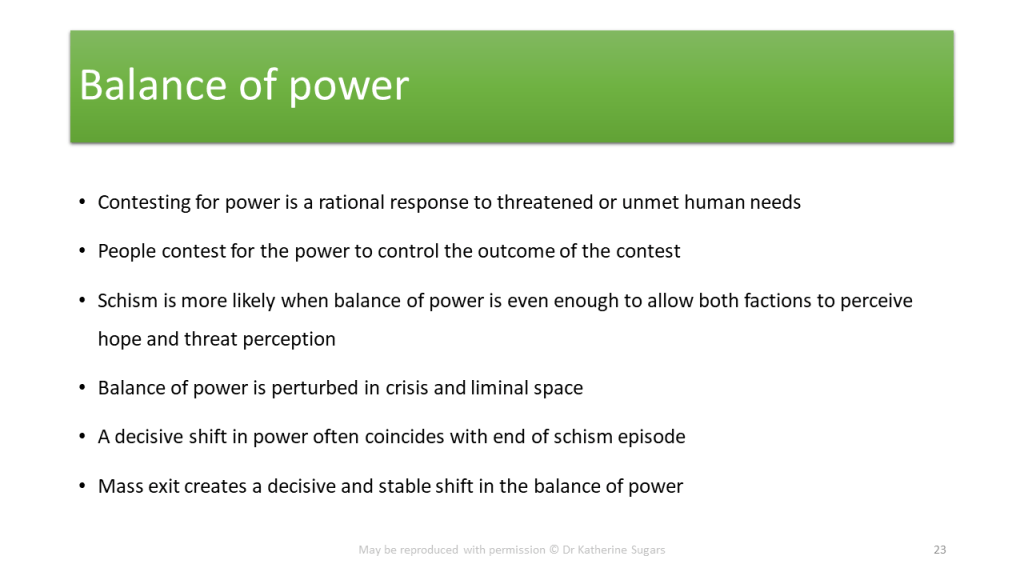
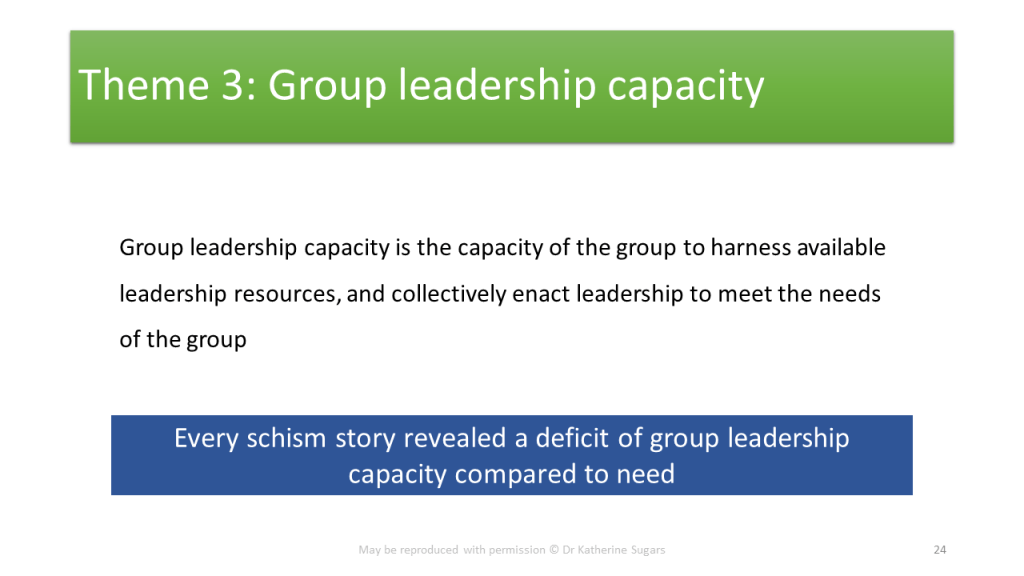
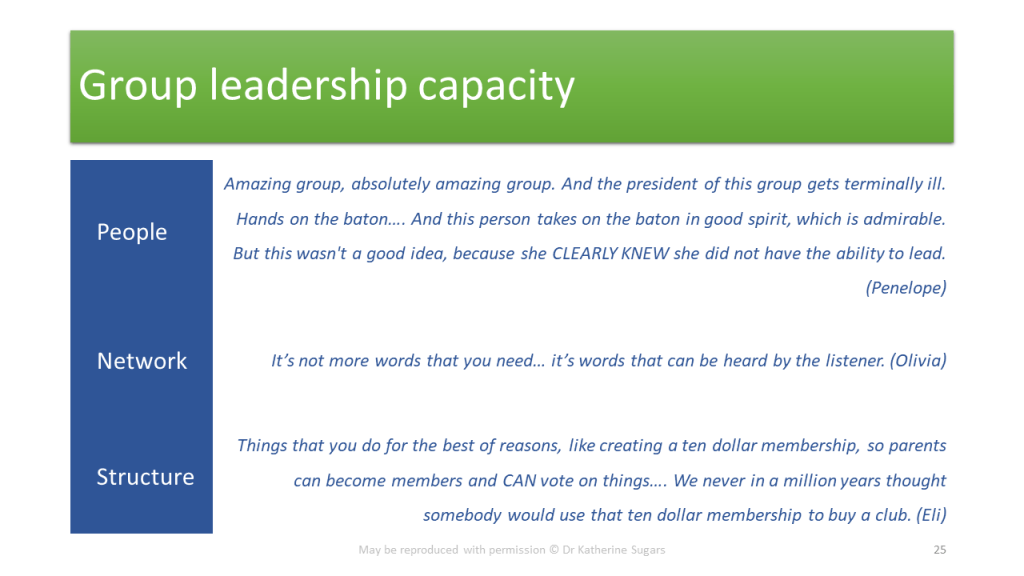
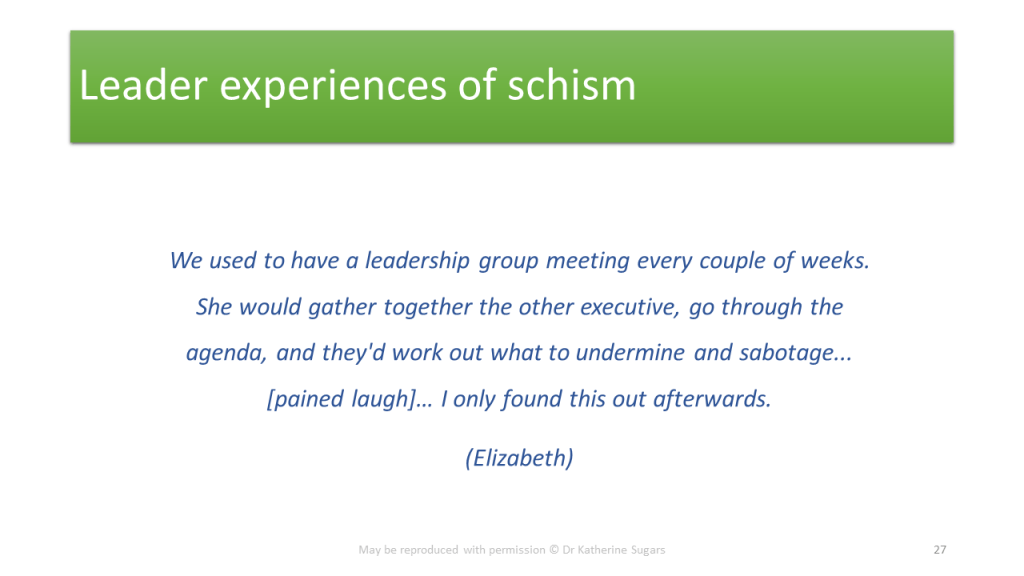
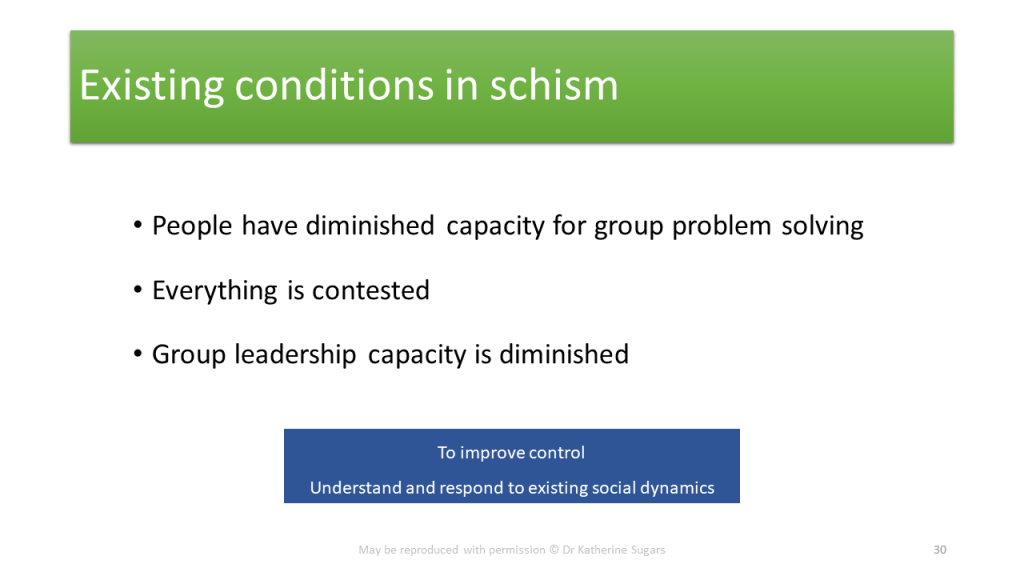
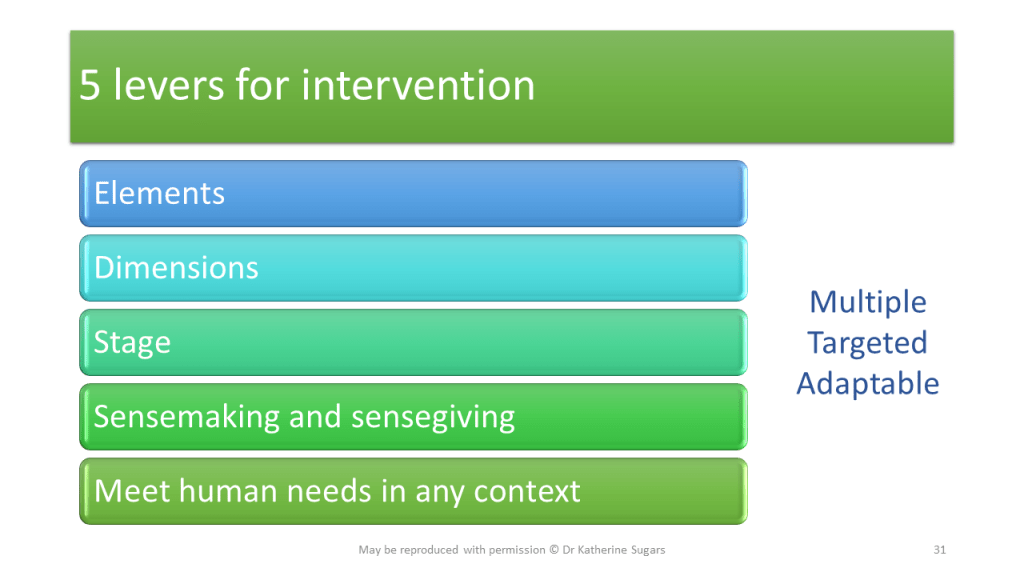
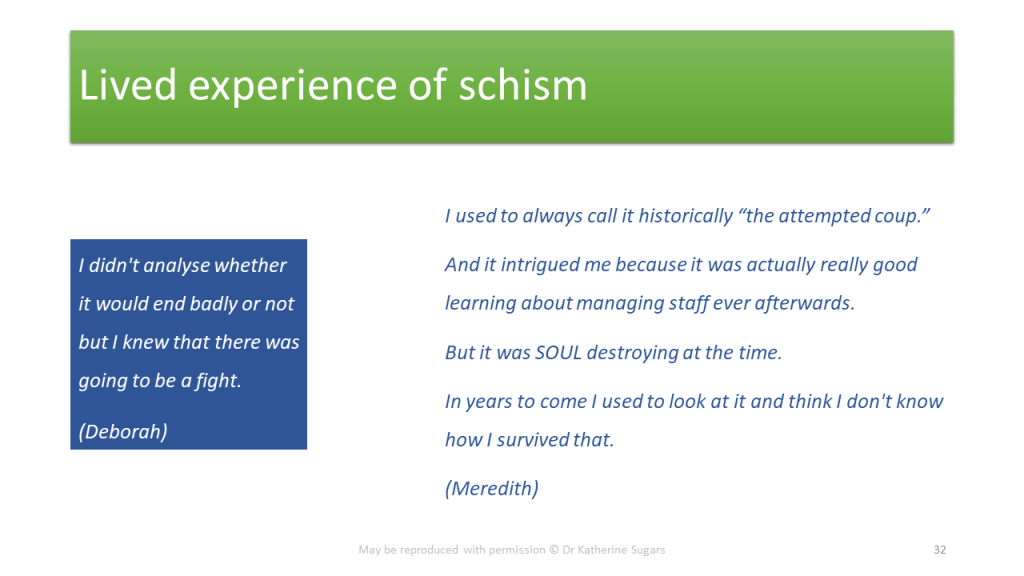
Listening to the stories of leaders—formal and informal—who achieved their goals against all odds, I noticed they had something intangible in common. These leaders saw approaches that other people didn’t consider.
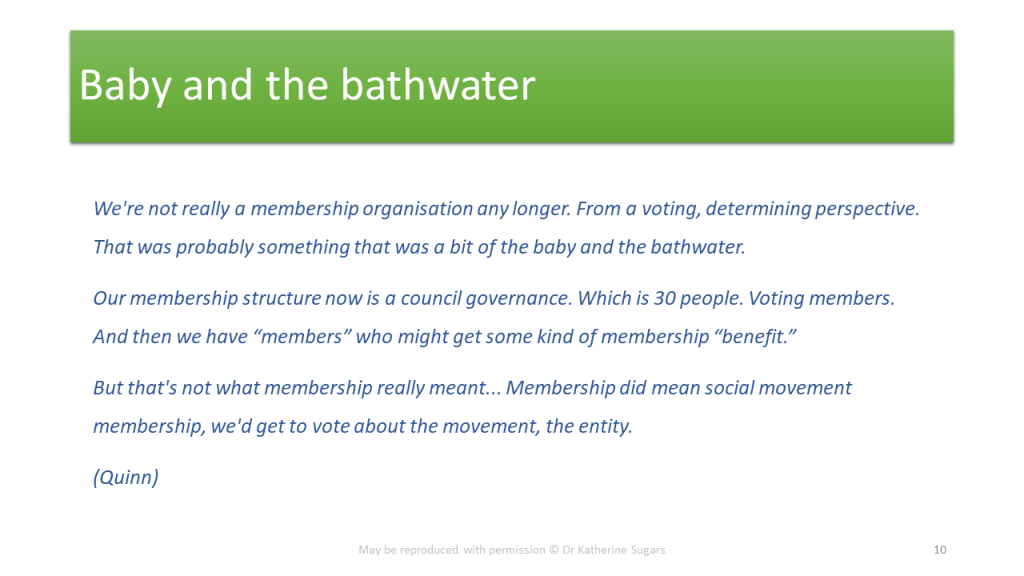
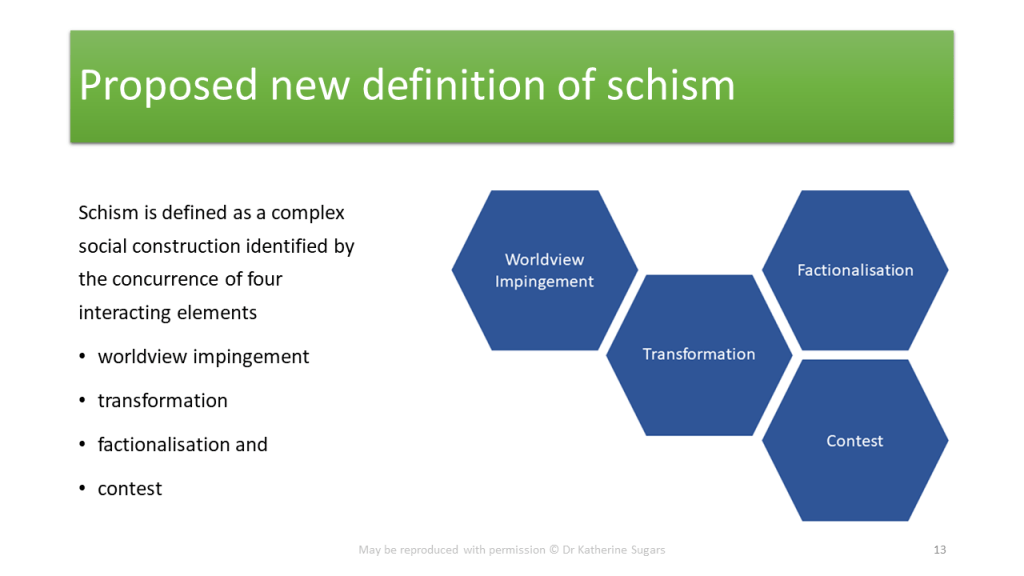
And this is why it is so empowering to re-define the nature of schism. In my view, the ontological shift is the foundation of all my research outcomes.
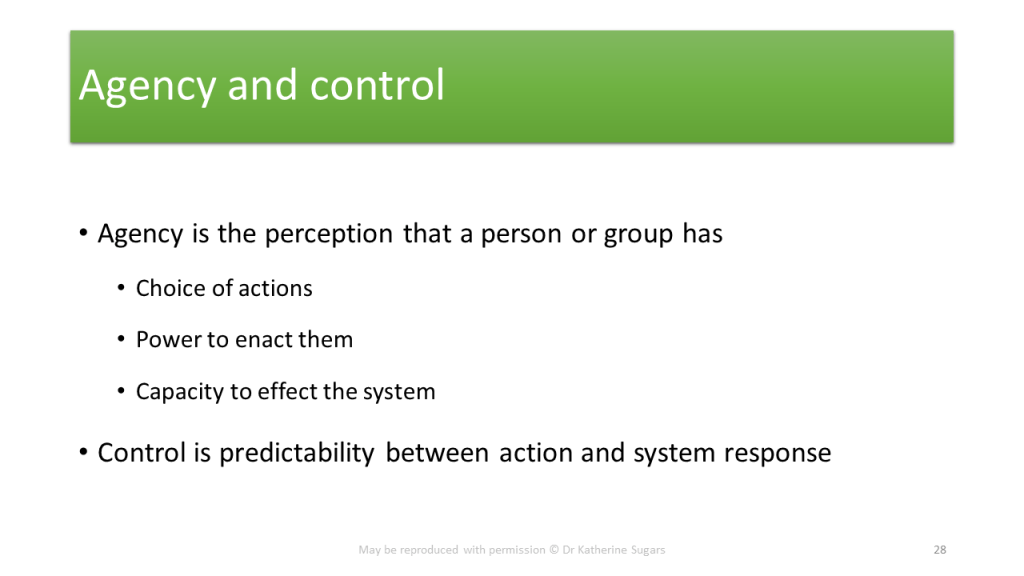
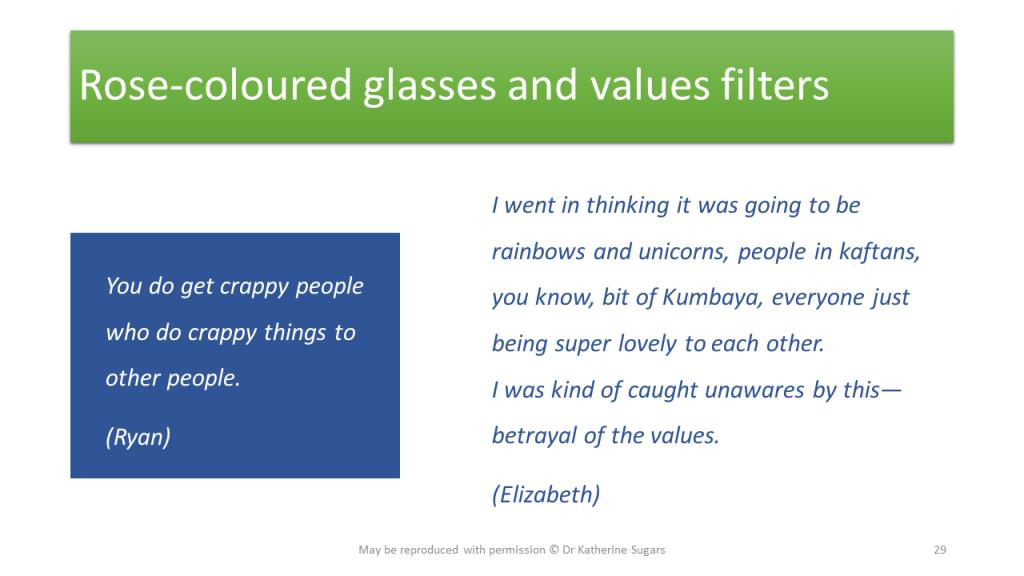
LETS makes explicit the underlying assumptions—that we often don’t realise we make—that restrict our agency. Challenging assumptions (especially their own) is where exceptional leaders found that extra wiggle room.
While often perceived as reified… leadership and power structures are social constructions which “have been made, and therefore can be unmade” (Haugaard, 2020, p. 117).
(Sugars, 2022, p. 181)
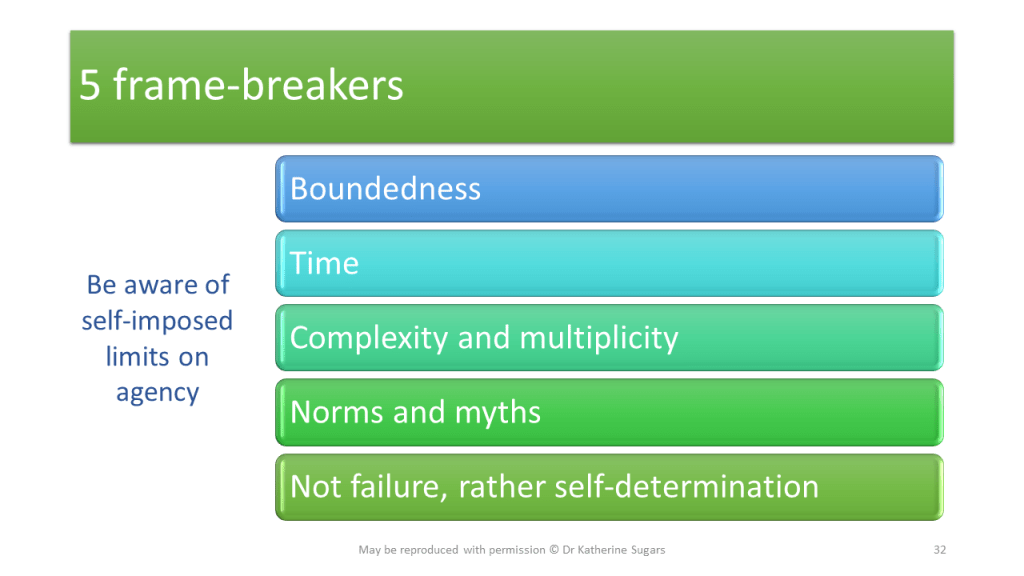
Specifically, what assumptions do we unconsciously make that don’t serve us in researching and managing schism? And can we use insights from LETS to break these frames?
Five frame-breakers… See organisational boundaries as constructed, permeable to people and power/knowledge, changeable, spannable. See time as nonlinear, stretchy, and time travel as possible. See cause and effect—including people’s experiences and worldviews—as complex and multiple. See norms and societal myths as socially constructed. And see schism, not as a failure of leadership and community, but as a necessary part of democratic organising.
Schism [is] the price we have to pay to choose how power and justice are distributed and how we enact society. Unless we are content to live in a hegemonic state of homogeneity and passivity, we cannot stop having schisms, but we can get better at them.
(Sugars, 2022, p. 273)
 Kath Sugars